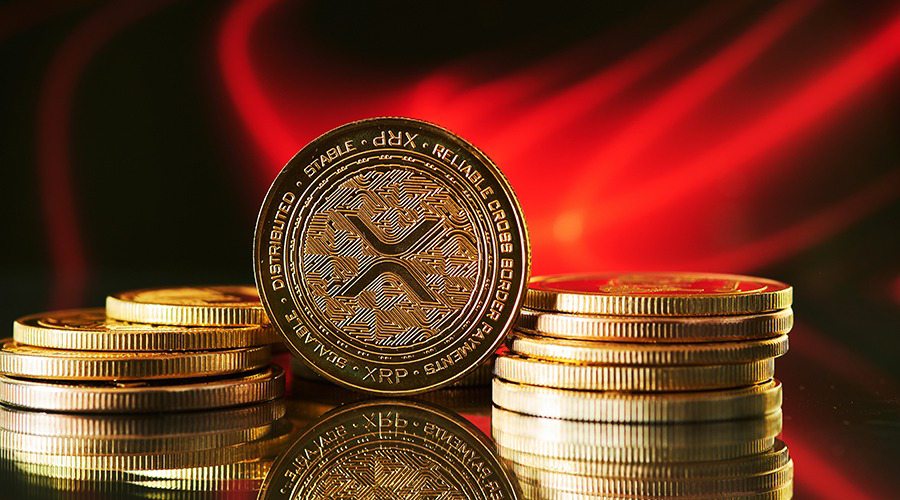
The cryptocurrency market has seen rapid growth and adoption over the past few years, with numerous blockchain projects emerging to address a range of financial challenges. Among these, XRP has carved out a unique space for itself by focusing on one particular problem: global payments. In an increasingly interconnected world, cross-border transactions are often slow, expensive, and inefficient. XRP, with its innovative technology, promises to address these issues by providing a faster, cheaper. And more efficient alternative to traditional banking systems. This article will explore the role of XRP in the future of global payments, shedding light. How it works and its potential to reshape the way money moves across borders.
XRP’s Technology: A Game-Changer for Global Payments
At the heart of XRP’s value proposition is its technology, which allows for real-time. Cross-border payments at a fraction of the cost and time of traditional systems. Unlike Bitcoin, which relies on proof-of-work to validate transactions, XRP uses a consensus algorithm. Involves trusted validators to reach an agreement on the transaction’s validity. This allows for faster transaction times, with XRP capable of processing around 1,500 transactions per second, far outpacing the likes of Bitcoin and Ethereum.
This technological advantage is essential for cross-border payments, which traditionally involve multiple intermediaries, lengthy processing times, and high transaction fees. With XRP, transactions can be completed in seconds, with minimal fees, making it an ideal solution for businesses and financial institutions looking to streamline their international payments.
Read Also: The Ripple Effect: How XRP is Shaping the Future of Payments
The Ripple network, which uses XRP as its native cryptocurrency, is already being adopted by a range of financial institutions around the world. Ripple’s partnerships with major banks, Santander, American Express, and Standard Chartered,. Have helped cement XRP’s position a leading player in the global payment space. By offering a more efficient alternative to traditional systems like SWIFT, Ripple’s technology enables faster settlement times and lower costs, which is crucial for businesses operating in a global marketplace.
The Role of XRP in the Evolution of Cross-Border Payments
Cross-border payments have long been a pain point for businesses and individuals alike. The traditional method of transferring money across borders involves using an intermediary. A correspondent bank, which can take several days to process a transaction. Additionally, high fees are often charged at each step of the transaction, making it a costly process for both senders and recipients.
XRP has the potential to revolutionise this system by providing a direct, low-cost solution for cross-border payments. Ripple’s network uses a distributed ledger that enables fast, secure transactions between financial institutions without the need for intermediaries. This means that money can be transferred across borders in real time, without the delays or fees associated with traditional banking systems.
Moreover, XRP’s ability to serve as a bridge currency in cross-border payments is a major advantage. Instead of relying on the currencies of multiple countries to make a transfer. XRP can be used as a neutral intermediary, allowing for seamless exchanges between different currencies. This simplifies the process and reduces the cost of converting currencies. As there is no need for multiple conversions between different currencies. As a result, XRP has the potential to significantly reduce the friction involved in international transactions, benefiting both businesses and consumers.
XRP’s Adoption by Financial Institutions and Businesses
The adoption of XRP by major financial institutions and businesses is a key indicator of its potential to reshape the global payments landscape. Ripple, the company behind XRP, has worked tirelessly to establish partnerships with banks, payment providers, and remittance companies. All of which have recognised the value of using XRP for cross-border transactions.
For example, Santander, one of the world’s largest banks, has integrated Ripple’s technology into its payment platform. Allowing customers to send international payments instantly and at a much lower cost than traditional methods. Similarly, American Express and Standard Chartered have partnered with Ripple to use XRP for cross-border payments. The growing interest in blockchain technology as a solution for international money transfers.
Read Also: Ripple and Its Role in the Evolution of Global Finance
As more financial institutions adopt XRP, its use case expands, and the network becomes more robust. Ripple’s focus on building a strong network of financial institutions ensures that XRP will continue to be integrated into the global payments infrastructure, further driving its adoption and usage.
The Challenges XRP Faces in Achieving Widespread Adoption
Despite its technological advantages, XRP faces several challenges that may hinder its widespread adoption. One of the biggest obstacles is regulatory uncertainty. As governments and regulators around the world continue to develop frameworks for cryptocurrencies. XRP’s role in the financial ecosystem remains unclear in many regions. Some countries have taken a cautious approach to regulating cryptocurrencies. While others have imposed strict regulations, which could affect the ability of Ripple to expand its network.
In addition to regulatory challenges, XRP faces competition from other blockchain-based payment systems, such as Stellar and SWIFT GPI. Ripple has established a strong foothold in the market, growing interest in alternative solutions could slow its growth and adoption.
Another challenge for XRP is the ongoing legal battle with the U.S. Securities and Exchange Commission (SEC). The SEC has filed a lawsuit against Ripple, alleging that XRP is a security and should be regulated as such. This legal dispute has created uncertainty for investors and businesses. Making it more difficult for Ripple to secure new partnerships and expand its network.
Conclusion
XRP technology and its focus on cross-border payments position it as a powerful tool for transforming the global financial system. By providing a faster, cheaper, and more efficient alternative to traditional payment methods. XRP has the potential to revolutionise the way money moves across borders. Ripple’s growing network of financial institution partners and its ability to serve as a bridge currency make. XRP a promising solution for the future of global payments.
However, challenges such as regulatory uncertainty, competition from other payment systems. And legal issues must be addressed for XRP to achieve widespread adoption. If Ripple can navigate these hurdles and continue to build its network of partners. XRP could play a pivotal role in the future of global payments, making international transactions faster, cheaper. And more accessible for businesses and consumers alike.
FAQs
1. What is XRP?
XRP is the native cryptocurrency of the Ripple network, designed to facilitate fast, low-cost cross-border payments.
2. How does XRP work in cross-border payments?
XRP acts as a bridge currency, enabling seamless exchanges between different currencies, reducing the cost and time involved in international transactions.
3. What are the benefits of using XRP for global payments?
XRP offers faster transaction speeds, lower fees, and eliminates the need for intermediaries, making it a cost-effective solution for cross-border payments.
4. Which financial institutions use XRP?
Major financial institutions such as Santander, American Express, and Standard Chartered have integrated Ripple’s technology and use XRP for cross-border payments.
5. What challenges does XRP face in achieving widespread adoption?
XRP faces regulatory uncertainty, legal challenges, and competition from other blockchain-based payment systems, which could hinder its growth and adoption.