Introduction
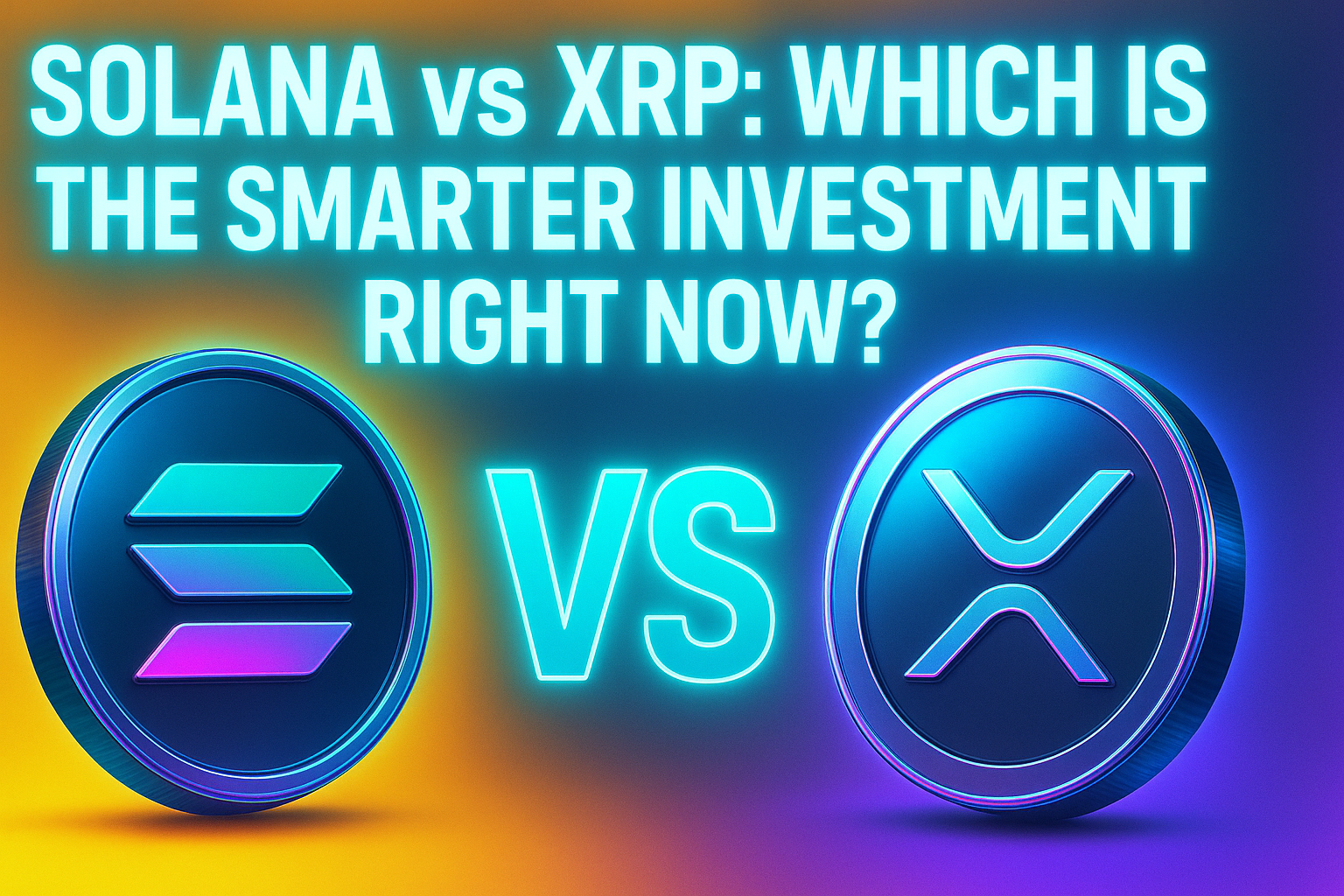
The debate of Solana vs XRP is heating up as investors search for the best opportunities in the evolving crypto market. Both projects represent very different approaches to blockchain technology, and each has gained a strong following. With Solana emerging as a high-speed platform for decentralized applications and XRP continuing its push into global banking.
The comparison of Sol vs XRP has become one of the most important conversations for anyone considering long-term investment. Understanding the strengths, weaknesses, and future potential of each project helps answer the critical question: which is the smarter investment right now?
Solana vs XRP: Different Visions for Blockchain
To understand Solana vs XRP, it is essential to look at their core purpose. Solana was designed to deliver speed and scalability for decentralized applications. It processes thousands of transactions per second using its unique proof-of-history mechanism combined with proof-of-stake. This makes Solana one of the fastest blockchains available, with the ability to support gaming, NFTs, DeFi platforms, and large-scale applications that require high throughput.
XRP, on the other hand, was created by Ripple to transform global payments. Instead of focusing on decentralized apps, XRP is positioned as a bridge currency that allows banks and financial institutions to transfer value across borders instantly. While Solana competes with Ethereum in the smart contract space, XRP competes with SWIFT and traditional banking systems. This difference highlights why the question of is XRP better than Solana does not have a simple answer; they serve completely different markets.
Read Also: How to Start with Ripple Online for Beginners
Sol vs XRP: Technology and Performance
In the Sol vs XRP debate, technology plays a central role. Solana has positioned itself as a high-performance blockchain capable of handling more than 50,000 transactions per second. Its low fees and fast confirmation times make it appealing to developers building complex decentralized ecosystems. However, Solana has faced criticism for network outages, raising questions about long-term stability.
XRP runs on the XRP Ledger, which does not rely on mining but instead uses a consensus protocol that allows transactions to settle in seconds at very low cost. This makes it highly efficient for cross-border payments and banking integration. The XRP Ledger is not designed for decentralized apps but is one of the most reliable systems for financial transfers. In comparing Sol vs XRP, Solana provides broader developer flexibility, while XRP offers unmatched speed and cost-effectiveness for value transfer.
Is XRP Better Than Solana for Investors?
The question of is XRP better than Solana depends largely on an investor’s goals. For those who believe the future of blockchain lies in financial institutions adopting digital assets for cross-border payments, XRP is highly appealing. Ripple has already partnered with numerous banks and financial providers, showing its utility in the real world. If Ripple continues to gain regulatory clarity, XRP could be one of the strongest performers in the coming years.
For investors who prefer exposure to decentralized ecosystems, NFTs, gaming, and Web3 applications, Solana offers greater opportunities. Its active developer community, growing number of decentralized apps, and rising popularity in the NFT space position it as a competitor to Ethereum. Solana’s speed and scalability also give it strong potential to dominate sectors where transaction costs and speed are critical. Therefore, whether XRP is better than Solana comes down to which sector an investor believes will expand more rapidly.
Solana vs XRP Price Prediction
Another major aspect of Solana vs XRP is price outlook. Analysts offering Solana vs XRP price prediction models often emphasize different factors. For Solana, adoption by developers and expansion of its ecosystem are key drivers. If Solana continues to attract large projects and solve its reliability issues, its price could rise significantly as demand for decentralized solutions grows.
For XRP, price prediction depends heavily on regulatory clarity and adoption by banks. Ripple’s ongoing legal battles have created uncertainty, but if XRP secures a favorable outcome, it could trigger massive institutional adoption. This is why XRP price predictions vary widely, with some analysts expecting explosive growth once regulations are resolved. Both Solana and XRP have strong long-term potential, but their price trajectories are influenced by very different market forces.
Future Outlook: Solana or XRP?
Looking at Solana vs XRP in the long run, both projects stand out for unique reasons. Solana is innovative, fast, and attractive to developers building decentralized apps, while XRP is efficient, stable, and positioned as a financial settlement layer for global banks. Instead of competing directly, they are building value in separate areas of blockchain technology.
For investors, diversification may be the smarter strategy. Solana provides growth exposure to the expanding Web3 ecosystem, while XRP offers exposure to institutional finance and cross-border payments. The combination of both could balance risk and reward, ensuring that investors benefit from whichever sector gains faster adoption.
Conclusion
The debate of Solana vs XRP highlights two powerful projects shaping blockchain in very different ways. Solana leads in decentralized applications with unmatched speed and scalability, while XRP remains a leader in financial settlements, targeting global banking networks. Investors asking is XRP better than Solana need to recognize that both serve distinct roles.
In terms of Solana vs XRP price prediction, both tokens could reach new highs as adoption continues, but the drivers behind each are not the same. Solana’s growth depends on developers and ecosystem expansion, while XRP’s success hinges on regulation and institutional use. The smarter investment right now may not be choosing one over the other, but understanding how each fits into the future of blockchain.
For those deciding between Sol vs XRP, the choice depends on belief in the future of decentralized apps versus financial integration. Either way, both Solana and XRP are positioned as critical players in the next wave of cryptocurrency innovation.
FAQs
1. What are the main differences between Solana and XRP?
Solana focuses on decentralized apps and scalability, while XRP is built for fast, low-cost cross-border payments. Both solve different problems in the blockchain space.
2. Is XRP better than Solana for long-term investment?
XRP may be better for investors who believe banks will adopt blockchain for global payments, while Solana is stronger for those betting on decentralized applications and Web3.
3. What is the Solana vs XRP price prediction?
Solana’s price depends on developer adoption and ecosystem growth, while XRP’s prediction is tied to regulation and banking partnerships. Both show strong future potential.
4. Can Solana outperform XRP in the future?
Solana could outperform XRP if Web3, NFTs, and DeFi grow rapidly. However, XRP may lead if banks and payment networks continue adopting Ripple’s solutions.
5. Should I invest in Solana or XRP today?
Investing in both can be a balanced strategy. Solana offers exposure to decentralized innovation, while XRP provides exposure to financial systems and global payments.